
Energy Efficiency in Data Centers
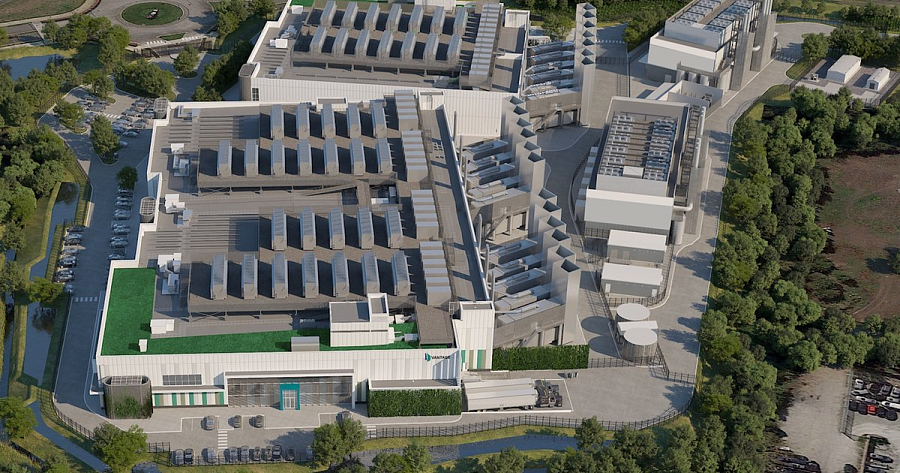
A data center is a centralized facility designed to house server and networking equipment, as well as to connect users to the internet.
Within a data center, three key infrastructure subsystems can be identified:
- Information Infrastructure: Responsible for data processing and storage.
- Telecommunication Infrastructure: Designed for data transmission and routing.
- Engineering Infrastructure: Ensures the operational functionality of all data center systems.
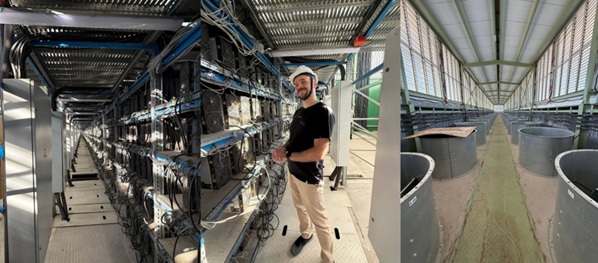
Engineering Infrastructure of Data Centers
The engineering infrastructure encompasses the following systems:
- Power supply
- Backup power supply
- Uninterruptible power systems (UPS)
- Air conditioning and microclimate control
- Cooling, ventilation, and heating
- Security and fire alarm systems, along with gas fire suppression
- Remote IP monitoring, power management, and access control systems
- Water supply and sewage
A crucial element of the engineering infrastructure is the power supply system, as its reliability directly impacts the functionality of all other data center systems. Thus, a standard for increasing the reliability of data centers has been developed based on the Tier classification levels.
Depending on the Tier class, the number of independent power feeds is determined.For data centers with a Tier rating above II, careful site selection is required, taking into account the possibility of connection to the energy grid. Global practices show that large data centers are typically located outside urban areas - in industrial zones - where there are no restrictions related to infrastructure or environmental requirements of residential areas.
A Tier IV data center distinguishes itself with complete redundancy, not only in telecommunications but also in power feeds. This allows for maintenance without interrupting operations and automatically compensates for emergency situations. However, the costs of such facilities are extremely high, and in some cases, the required reliability level is achieved by constructing a backup data center.
Tier Classification of Data Centers
| Tier Level | Description | Availability (%) | Redundancy |
|---|---|---|---|
| Tier I | Basic capacity; non-redundant components | 99.671% | No redundancy |
| Tier II | Redundant components for critical systems | 99.749% | Partial redundancy |
| Tier III | Concurrently maintainable; redundant for all critical systems | 99.982% | Full redundancy |
| Tier IV | Fault-tolerant; continuous operation | 99.995% | Full redundancy |
Key Points:
- Tier I: Simple infrastructure with no redundancy.
- Tier II: Slight improvements, with some redundant components.
- Tier III: Allows for maintenance without downtime, includes full redundancy.
- Tier IV: High-level fault tolerance, designed for maximum uptime.
Regulatory Framework for Power Supply Design in Data Centers
In the CIS countries, there are no specialized regulatory documents for designing power supply systems for data centers.
Therefore, design organizations rely on:
- TIA-942 standard
- Electrical installation rules (PUE)
Based on an analysis of these documents, specialists from ENECA have identified the main features for designing power supply systems in data centers:
- The primary power source is from urban electrical networks, with the number of feeds determined by the Tier class.
- Despite being classified as a first-category reliability facility under PUE, it is recommended to mandatorily use backup power sources (diesel generators, diesel rotary UPS, etc.).
- Single or parallel uninterruptible power sources are allowed, provided that reliability requirements are met.
- Central nodes for cable systems and network equipment may be housed in the main distribution point.
- There may be one or multiple cable entry rooms.
- The minimum load for power outlet groups is 2.5 kW, with a minimum density of one dual outlet per 4 m².
- The same reliability requirements apply to computer rooms and external communication spaces.
- The monitoring system must ensure accurate control of power supply parameters in each designated zone.
- Engineering systems and automated workstations must connect through dedicated distribution panels.
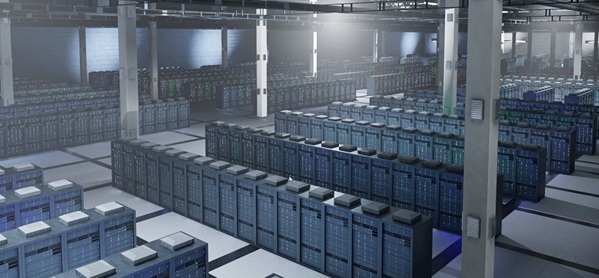
Pre-Project Development and Energy Efficiency
The pre-project stage is a critical phase in the creation of a data center.Detailed development of technological schemes and selection of primary equipment can significantly reduce capital expenditures for construction.
Moreover, at this stage, the client has the opportunity to analyze various engineering solutions and optimize energy consumption to reduce the Power Usage Effectiveness (PUE) ratio. This indicates how much energy is lost in mechanical and electrical systems. Failure to meet air conditioning requirements can lead to localized overheating zones for equipment.
Mining Centers as a Specialized Type of Data Center
Mining centers represent a specialized class of data centers designed for performing computations within distributed blockchain networks. Structurally, they are similar to traditional data centers, but they exhibit significantly higher energy consumption and heat generation.
The scale of mining centers varies from individual racks equipped with ASIC hardware to industrial complexes. The continuous operation of these facilities imposes heightened requirements for the reliability of power supply.
- External and Backup Power Supply Schematics
- Guaranteed Power Supply Systems
- Effective Heat Dissipation Solutions
- Optimization of Energy Consumption and Operational Costs
Effective design of power supply systems for data centers requires a comprehensive approach.
ENEСA possesses extensive experience in designing data centers of any scale and complexity.