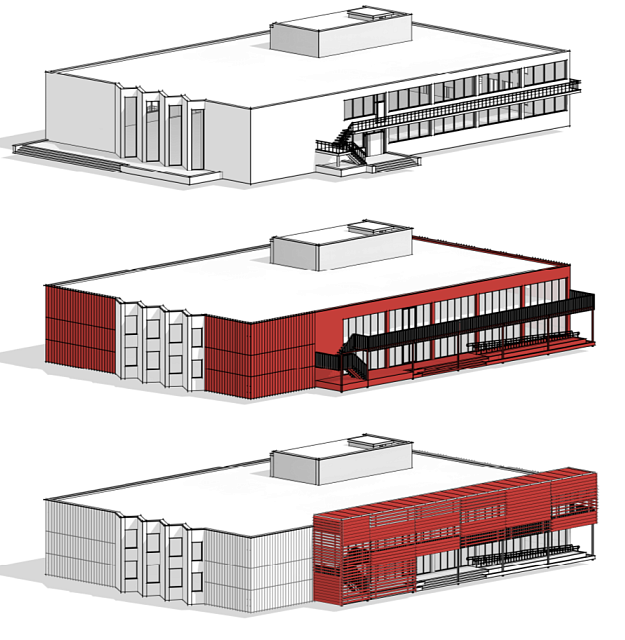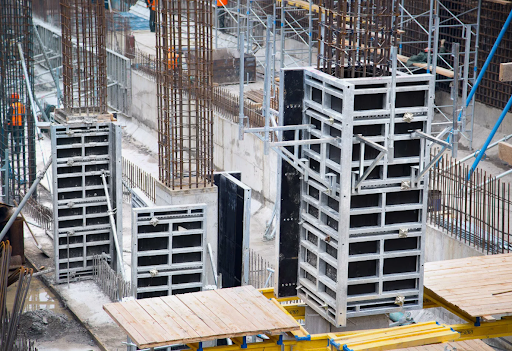

Precast Concrete Design for Modern Projects
Advantages compared to monolithic concrete briefly
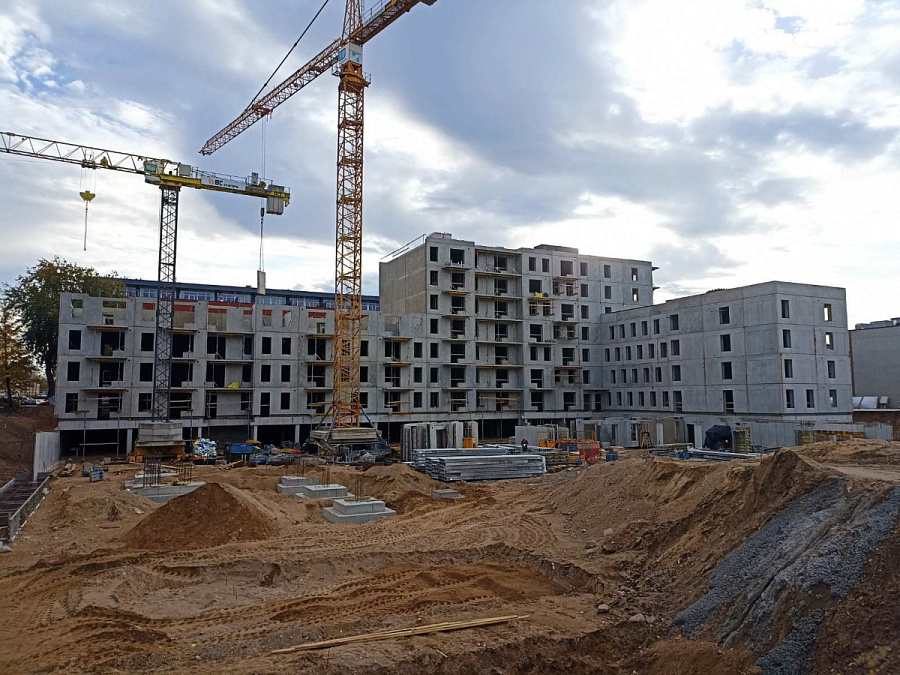
(Here is a full article with numbers)In a conventional build, many structural tasks depend on site conditions (weather, curing time windows, sequencing constraints). With precast elements:
- Element interfaces are engineered early: connections between columns, beams, slabs, and wall panels are designed as part of the system.
- Production-to-installation interfaces are standardized: geometry, reinforcement detailing, lifting points etc.
- Erection sequence becomes part of the design package: installation order is planned so stability and load paths are maintained throughout construction phases.
Typical precast elements and their structural purpose
A precast structure is usually built from a combination of element groups. The following precast part names are commonly used:
- Floor elements designed for efficient spanning and rapid placement.
- Flat slab solutions for straightforward structural plate behavior.
- Ribbed slab systems that optimize material use while providing the required stiffness and strength.
- Columns for controlled transfer of vertical loads with consistent cross-sectional properties.
- Beams that form the main load-transferring skeleton and coordinate interfaces with slabs and walls.
- Wall panels. Single-layer wall panels used where simpler wall build-ups meet the required performance.
- Multy-layer wall panels used to achieve higher building-envelope performance in one engineered component.
- Facade outdoor and access elements - balcony slabs providing durable cantilever or supported balcony geometry.
- Stairs and precast landings that complete stair geometry and ensure accurate connections.
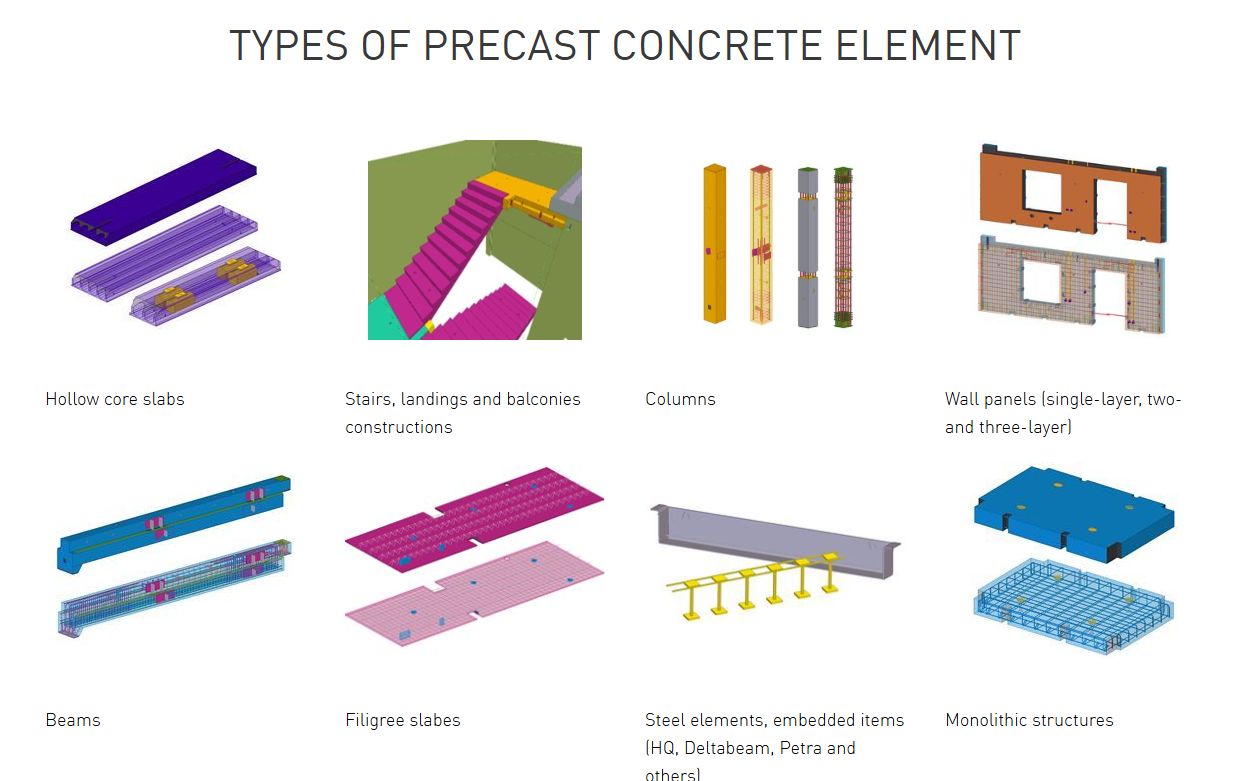
In practical projects, additional prefabricated components can be designed as needed even if not listed in a given early-planning interface.
Early cost planning: quick budgeting for precast projects
For construction companies, a key requirement is fast feasibility and budget validation before full detailing. It is easy to count the price of the project with our online calculator for precast concrete projects
*Select precast element types, choose between types of the structure, enter the number of unique elements, and obtain an estimated cost for general planning.
Sustainability: why precast concrete is a strong construction choice
When construction companies evaluate sustainability, they need it to be real and measurable across the workflow - not just a marketing claim. Precast supports sustainability through:
- Industrialized production and reduced site waste: controlled casting and standardized processes can improve material efficiency and reduce variability-related rework.
- Shorter on-site duration: faster installation can reduce time-related environmental impacts (site logistics, temporary works duration, and weather exposure).
- Better lifecycle performance alignment: precast elements are engineered as systems with defined interfaces, which supports durability and maintenance planning.
- Low-carbon pathways in the concrete supply chain: precast production can integrate sustainability measures such as optimized mixes and lower-impact cementitious materials - supporting decarbonization goals in European construction.
European construction industry outlooks continue to indicate growth for precast markets through the coming years, reflecting demand for prefabricated concrete components in both building and infrastructure.
While different reports use different methodologies, the consistent takeaway is that precast continues to gain adoption for building and infrastructure components—because it aligns with performance, schedule, and environmental goals.
Our advantages in precast concrete design
We are proud of our precast concrete projects. Here are some key advantages that set us apart:
-
Engineering Team: Our precast concrete design department comprises over 40 experienced engineers
-
Manufacturer Collaboration: Our designers analyze the specifications of precast concrete manufacturers and adhere closely to their guidelines. This approach minimizes production times and reduces costs by eliminating the need for custom components in the project.
-
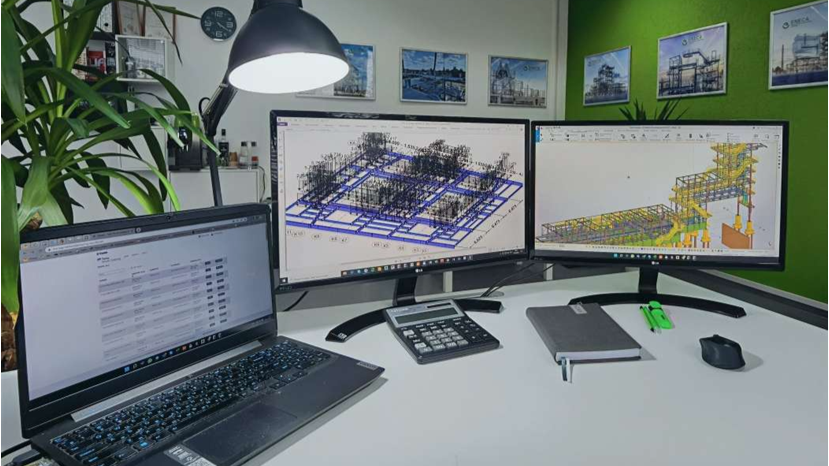
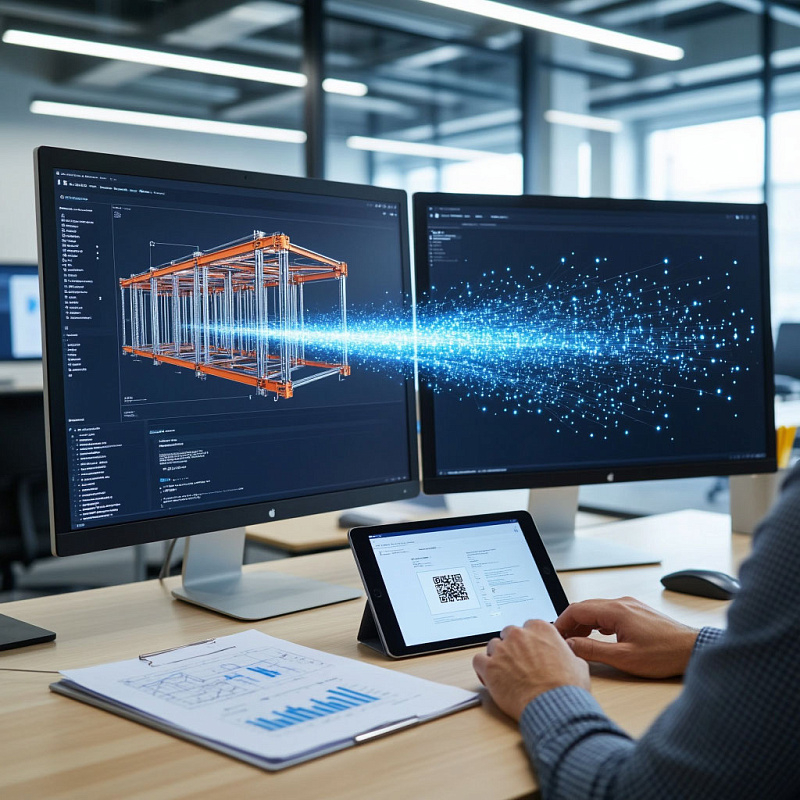
Advanced Software Utilization: We employ cutting-edge software tools and our own design process automation solutions that enhance accuracy, prevent collisions and streamline the modeling process
-
Sustainability Focus: Our designs prioritize sustainability, ensuring that our precast solutions contribute to energy-efficient construction practices while optimizing resource use.
-
Fast-Track Project Delivery: Our efficient design approach allows for rapid project turnaround times, helping clients meet tight deadlines without compromising on quality.
By integrating these advantages, we strive to deliver exceptional precast concrete structures that meet our clients' diverse needs while maintaining the highest industry standards.
If you share your project type (e.g., residential, shopping center, housing complexes, parking structures) and approximate number of element groups, we can propose a precast planning structure (element list + information needed for cost and engineering scope).